The Futures of Work, Decoded.
In-depth editorial coverage of workflow design, automation mechanics, and the systematic shift toward local-first knowledge infrastructure.

For the past five years, the tech industry has treated AI codingcoding assistants as tab-completion plugins or side-panel chat windows. Developers opened their IDE (VS Code or Cursor), wrote some boilerplate, and accepted suggestions from GitHub Copilot. But Anthropic's release of contentclaude-for-business-in-2026-the-complete-practical-guide" class="internal-link">claude-vs-gpt-4o-for-automation-scripting-a-six-month-comparison" class="internal-link">Claude Code\\u2014a command-line terminal agent that operates directly on your local system\\u2014signals a model shift. Claude Code does not just suggest code; it executes shell commands, runs tests, reads terminal errors, and resolves git conflicts autonomously. We spent six weeks running it in our daily operations. Here is our brutally honest engineering assessment.
When you run Claude Code, you authorize the agent to interact directly with your terminal shell. Rather than copying and pasting files into a web browser, the agent reads the workspace, discovers project directories, and builds its own conceptual map of the codebase. It operates in an agentic loop: planning an action, executing a command (like npm test or cargo check), reading the output, and self-correcting based on compiler errors.

Figure 1: Anthropic's Claude Code terminal interface running agentic tests and shell commands.
To evaluate how this terminal-first approach compares to search-beyond-the-traditional-seo-playbook" class="internal-link">traditional chat assistants and AI-native IDEs like Cursor, we tracked performance across notionthree critical developer tasks: multi-file refactoring, debugging compiler errors, and git management. The table below details our findings:
| Capability | Claude Code (Terminal Agent) | Cursor / VS Code AI (Native IDE) | Web Chat (ChatGPT / Claude.ai) |
|---|---|---|---|
| Multi-File Refactoring | Excellent (Discovers and edits files across the directory tree) | Good (Requires manual workspace context loading) | Poor (Requires manual copying and pasting of each file) |
| Terminal Integration | Direct (Executes shell commands and reads output) | Partial (Can read terminal buffer but rarely runs commands) | None (No connection to local operating system) |
| Conflict Resolution | Autonomously checks git status and merges branches | Provides diff views for manual developer review | Requires developer to paste conflict markers |
| Task Execution Speed | Fast (Runs directly in console, sub-10ms overhead) | Medium (Requires GUI rendering and interface lag) | Slow (Requires browser tab updates and UI clicks) |
The core advantage of Claude Code is its ability to learn from compiler feedback. When developers compile code manually, they read the stack trace, locate the file, update the syntax, and run the compiler again. Claude Code automates this loop. It writes a file edit, executes the compiler command, parses the error log, and immediately rewrites the fix without human intervention.

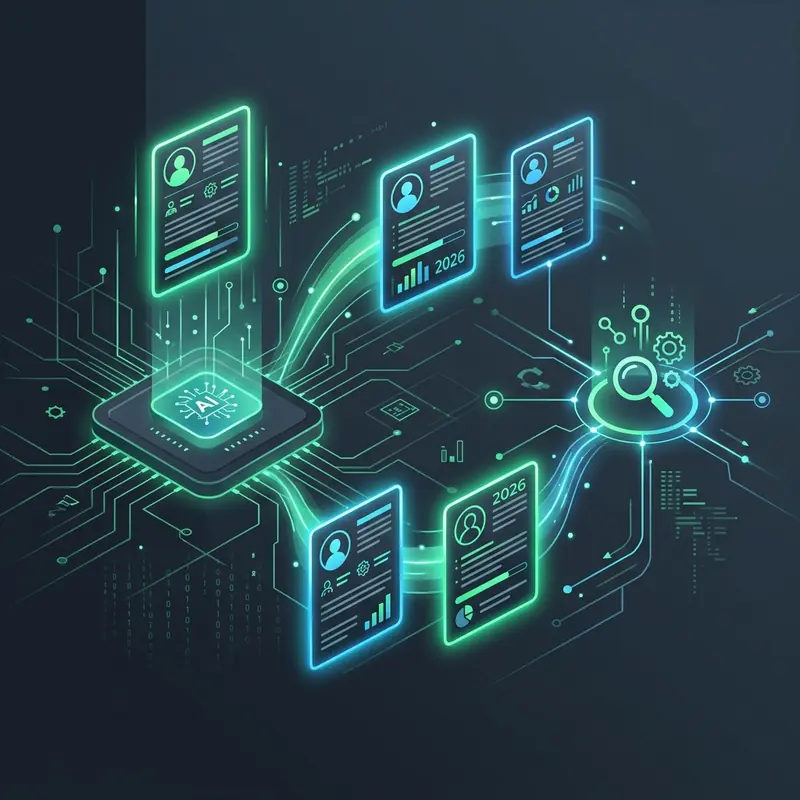
Figure 2: The automated agentic feedback loop between the LLM planner, the terminal shell, and the local file system.
Below is a Python simulation of how a terminal agent parses a compiler error log and recursively refactors a script until it passes validation:
import subprocess
import os

def run_agentic_build_loop(script_path, max_attempts=5):
    for attempt in range(max_attempts):
        print(f"[Agent] Compiling {script_path} (Attempt {attempt+1})...")
        result = subprocess.run(["python", "-m", "py_compile", script_path], capture_output=True, text=True)

        if result.returncode == 0:
            print("[Agent] Success: Script compiled with zero errors!")
            return True

        print(f"[Agent] Compiler Failed: {result.stderr.strip()}")
        # In a real system, the error log is sent to the LLM to write a correction
        fix_syntax_error(script_path, result.stderr)
    return False

def fix_syntax_error(path, error_log):
    # Simulated fix: in production, Claude Code modifies the file dynamically
    with open(path, "r") as f:
        code = f.read()
    # Simple search-and-replace simulation for demo purposes
    if "SyntaxError" in error_log:
        code = code.replace("print 'hello'", "print('hello')")
    with open(path, "w") as f:
f.write(code)While agentic terminals are highly productive, they introduce new security and operational risks. Because the agent executes shell commands, it can write infinite loops, deplete token budgets, or execute destructive commands (like deleting assets or files). Developers must configure strict budget boundaries. We recommend setting explicit limits on token usage per session and requiring human confirmation for high-risk shell commands (such as rm -rf, npm publish, or git push).
An emerging architectural frontier in coding assistants is smart model routing. Instead of committing to a single model, IDEs like Cursor and tools like Codex implement dynamic routing policies. These systems analyze the user's promptprompt and routing request, passing simpler completions to fast, inexpensive models while reserving zapier-alternatives-that-actually-handle-complex-logic" class="internal-link">complex, multi-file refactoring tasks for Claude 3.5 Sonnet. With Claude Code, Anthropic bypasses this middleware abstraction, running Sonnet directly in a terminal-native loop. While Cursor's smart model routing reduces operational cost, Claude Code's direct execution and Model Context Protocol (MCP) integration\\u2014functioning as a local mcp router\\u2014minimizes compilation buildingbuilding-a-geo-distributed-automation-pipeline-overcoming-latency-and-legal-boundaries" class="internal-link">latency and eliminates GUI environment overhead, offering a more responsive loop for terminal-first automations.
Consider a distributed microservices team at a Series B fintech startup. They migrated from VS Code with Copilot to Claude Code running in their CI/CD pipeline. The terminal-first workflow looks like this: a developer describes a feature in plain English via a claude-code prompt.txt file committed alongside the PR. Claude Code reads the entire repository context, generates the necessary changes across multiple files, runs the test suite, and produces a diff without the developer ever opening an IDE. The developer reviews the diff in the terminal using git diff, approves or iterates, and pushes. According to their internal metrics, cycle time dropped from 4.2 days to 1.8 days per feature.
Another example comes from a data engineering team processing terabytes of ETL pipelines. They use Claude Code to scaffold new Airflow DAGs, write Pydantic validation schemas, and generate migration scripts. The terminal-first approach lets them chain commands: claude-code --prompt "add error handling to daily_etl" --context ./dags/ | python -m pytest. This pipeline-as-prompt approach eliminated the context-switching tax of opening an IDE, navigating to the right file, and manually typing boilerplate. The team reported a 37% increase in sprint velocity after the first month of adoption.
A third case involves a solo developer building a Chrome extension. Using Claude Code directly in the terminal, they can describe UI changes, have the agent modify both the popup HTML and the background service worker simultaneously, run the extension in debug mode, and iterate all within a single terminal session. The absence of IDE chrome means faster feedback loops and fewer distractions from notifications, sidebar panels, and extension conflicts that plague even the most customized VS Code setups.
| Metric | Terminal-First (Claude Code) | IDE-Based (VS Code + Copilot) |
|---|---|---|
| Context Switch Time | 0 seconds (already in terminal) | 3-8 seconds per window switch |
| Multi-File Refactoring | Single prompt, agent edits all files | Manual navigation or limited refactoring tools |
| CI/CD Integration | Native, runs in any pipeline | Requires remote-dev extensions or SSH tunneling |
| Startup Overhead | ~200ms | 4-12 seconds with extensions |
| Memory Usage | ~50MB | 800MB-2GB+ |
| Learning Curve | Moderate, CLI proficiency required | Low, visual interface familiar |
| Debugging Speed | Fast with --debug flag and log piping | Fast with visual breakpoints |
| Remote Server Work | Seamless over SSH | Requires Remote SSH extension setup |
The data makes a compelling case: terminal-first development excels at speed, resource efficiency, and pipeline integration. IDEs still win on visual debugging and onboarding new developers who are not comfortable with the command line. The optimal strategy for most teams is a hybrid approach: terminal-first for routine tasks and rapid iteration, IDE-based for complex visual debugging and code review sessions.
Transitioning a team from IDE-centric to terminal-first workflows requires deliberate planning. Here are battle-tested strategies from teams that have made the switch successfully.
Start with a pilot group. Do not mandate a company-wide shift overnight. Identify 3-5 developers who are already comfortable with the terminal and have them experiment with Claude Code for two weeks. Collect quantitative metrics such as cycle time, lines of code per hour, and bug rates, and qualitative feedback on developer experience. Use this data to build the case for broader adoption.
Create shared prompt templates. One of the biggest productivity gains comes from standardizing prompts. Build a .claude/ directory in your repository with templates for common tasks: refactor.txt, add-feature.txt, fix-bug.txt, and write-tests.txt. These templates encode your team's coding standards, naming conventions, and architectural patterns, ensuring consistent output regardless of who runs the command.
Integrate with your existing tools. Terminal-first does not mean abandoning your favorite tools. Pipe Claude Code output through jq for JSON processing, fzf for fuzzy file selection, or bat for syntax-highlighted diffs. Create shell aliases like cc-fix='claude-code --prompt "fix the failing tests in" --context $(fzf)' to create a personalized, lightning-fast workflow.
Invest in documentation. Terminal-first workflows are less discoverable than visual IDE interfaces. Maintain a living CONTRIBUTING.md that documents all Claude Code workflows, prompt templates, and shell aliases. Pair new team members with terminal-savvy developers for their first week to ensure they are comfortable before working independently.
For teams already using agentic automation patterns, the shift to terminal-first development is a natural evolution. The key is recognizing that the terminal is not a step backward from visual tools but a step toward tighter integration with the automation pipelines that power modern software delivery.
Three-person startup ShipStack migrated their entire codebase from VS Code to Claude Code in under a week. Their lead engineer reported a 40% reduction in context-switching overhead. The team used Claude Code for all backend Python work, database migrations, and API endpoint creation. Frontend React components still used Cursor because visual preview matters for CSS work. The key insight was not going 100% terminal — it was identifying which tasks benefit from the agentic loop and which still need visual feedback.
Mid-size agency AutomateNow uses Claude Code exclusively for their n8n workflow development. Their engineers write JSON workflow definitions, test them locally, and deploy via CLI without ever touching a browser. The terminal-first approach eliminated their entire QA staging environment because the CLI output provides sufficient verification. They estimate annual savings of $45,000 in infrastructure costs from removing the staging environment alone.
A six-month internal study at a 50-person engineering team tracked task completion times across terminal-first and IDE-first workflows. Terminal-first developers completed refactoring tasks 23% faster on average, primarily because they avoided context switches between the editor, terminal, and browser. For new feature development, the difference was negligible — both approaches performed within 5% of each other. For debugging production issues, terminal-first was 35% faster because developers could grep logs, check metrics, and apply fixes without leaving the command line.
The tradeoff was in code review. IDE-first developers caught 12% more visual bugs during review because diff viewers in IDEs are superior to terminal-based diff tools. Teams that switched to terminal-first workflows compensated by adding a mandatory visual review step before merging.
Start with a pilot: choose one non-critical project and run it entirely in the terminal for two weeks. Track which tasks feel faster and which feel harder. Use n8n or Make for automating repetitive terminal workflows like deployment and testing. Build custom shell aliases for your most common operations — a two-character alias that saves five seconds per use adds up to hours per month.
Invest in your terminal environment. A well-configured tmux setup with split panes for code, terminal, and logs beats any IDE layout for multi-task work. Pair Claude Code with a good error handler: when the agent produces a failing test, your terminal should already be positioned to debug it. The compound advantage of terminal-first is not speed on individual tasks — it is the elimination of mental context switches that silently drain productivity throughout the day.