The Futures of Work, Decoded.
In-depth editorial coverage of workflow design, automation mechanics, and the systematic shift toward local-first knowledge infrastructure.
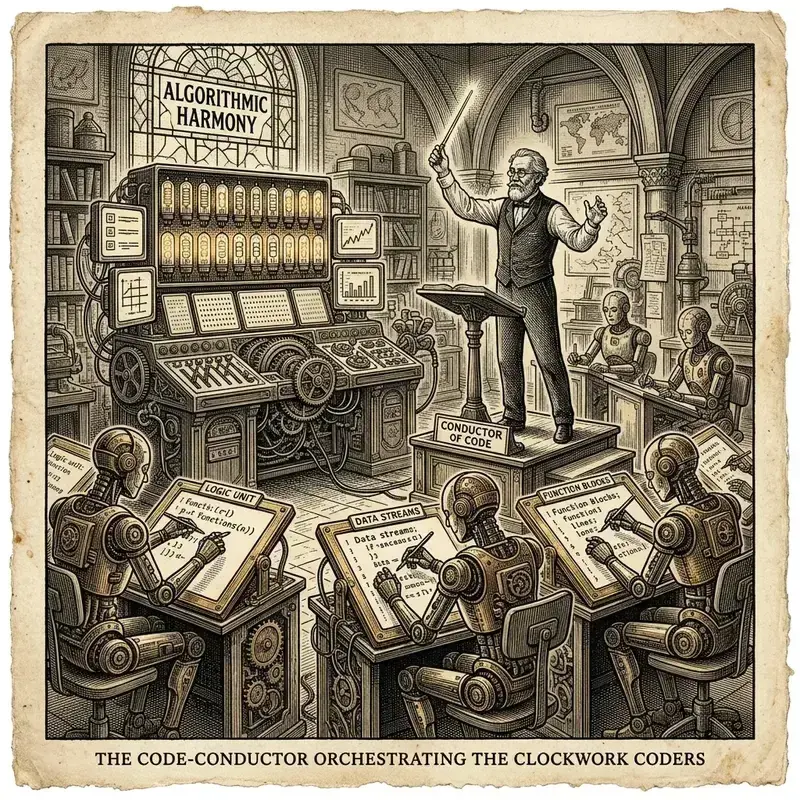
For decades, the core tools of software engineering remained conceptually static. We moved from text editors to integrated development environments (IDEs), and eventually added syntax-level code assistants that predicted the next ten characters of a line. But the human developer still owned the execution loop: claudewriting a block of code, compiling it, running the test suite, reading the stack trace, and manually editing the files. In 2026, this loop is shifting to the Agentic SDLC (Software Development Life Cycle), notionwhere autonomous codingagents execute the full edit-test-debug cycle.
Unlike simple inline code assistants, repository-aware agents operate with a global context. They are equipped with file tree search, dependency graph traversal, terminal execution, and compiler toolchains. The developer acts as an orchestrator, describing the desired changes in natural language. The agent then implements a complete execution loop:
1. Analysis: Crawl the file tree to build a localized dependency graph of relevant files.
2. Planning: Propose a series of file edits, outlining which functions or files will change.
3. Execution: Modify files and compile the project using local build tools.
4. Verification: Run the unit tests and inspect compiler and linter output.
5. Correction: Parse stack traces or linter errors and recursively edit the code until all tests pass.
To understand the mechanics of the agentic loop, consider a script that runs in a CI pipeline to resolve failing tests autonomously. Below is a Python implementation showing how an agent reads a test error output, makes edits to the target file, compiles, and loops until the test passes:
import subprocess
from openai import OpenAI

client = OpenAI()

def run_tests():
    result = subprocess.run(["npm", "test"], capture_output=True, text=True)
    return result.returncode == 0, result.stderr

def fix_code_with_agent(file_path: str, error_log: str):
    with open(file_path, "r", encoding="utf-8") as f:
        code = f.read()

    promptprompt = f"""
    The test suite failed with the following error:
    {error_log}

    Here is the content of the file:
    {code}

    Fix the syntax or zapierlogic error and output ONLY the corrected code without markdown blocks.
    """

    response = client.chat.completions.create(
        model="-vs-chatgpt-vs-gemini-for-content-teams-in-2026" class="internal-link">claude-for-business-in-2026-the-complete-practical-guide" class="internal-link">claude-vs-gpt-4o-for-automation-scripting-a-six-month-comparison" class="internal-link">gpt-4o",
        messages=[{"role": "user", "content": prompt}]
    )

    with open(file_path, "w", encoding="utf-8") as f:
        f.write(response.choices[0].message.content)
    print(f"Re-wrote {file_path}")

def autonomous_debug_loop(file_path: str):
    for attempt in range(3):
        passed, error_log = run_tests()
        if passed:
            print("Tests passed successfully!")
            return True
        print(f"Attempt {attempt+1} failed. Escalating trace to LLM...")
        fix_code_with_agent(file_path, error_log)
    return False

# Run loop
autonomous_debug_loop("./src/utils/auth.js")According to Gartner's 2026 Developer Velocity Report, organizations that integrated repository-aware agents into their development cycles saw time-to-market for minor feature additions fall by 64%. The building-a-geo-distributed-automation-pipeline-overcoming-latency-and-legal-boundaries" class="internal-link">latency of the developer workflow shifted from days of manual drafting to minutes of autonomous generation. However, this velocity introduces a secondary bottleneck: the review burden. With agents generating code in seconds, human engineers spend more time auditing pull requests than writing original code.
The introduction of autonomous coding agents into the development process is not merely an acceleration of existing workflows — it fundamentally changes which architectural decisions humans need to make and which can be delegated. Understanding this boundary is critical for engineering teams adopting agentic development tools.
Traditional software development assigns architectural decisions to senior engineers and implementation tasks to junior engineers and mid-level developers. Agentic coding agents reverse this economic logic: they are excellent at implementation (writing syntactically correct code that follows specified patterns), mediocre at local design decisions (choosing the right abstraction for a new module), and unable to make system-level architectural decisions (choosing between microservices and monolith, selecting persistence strategies, designing API contracts for longevity). This means the value of senior engineering time shifts from implementation oversight to architectural definition and agent direction.
The practical workflow in teams that have successfully adopted agentic development looks like this: senior engineers define clear interface contracts, acceptance criteria, and constraint specifications for each unit of work. The agent implements the unit to those specifications, often with multiple candidate implementations that the senior engineer evaluates. The senior engineer then makes the design choices between candidates and iterates on the specification when the agent's implementation reveals ambiguities. This collaborative loop moves faster than traditional implementation but requires more upfront specification investment — a shift that some teams find counterintuitive initially. The specification quality directly determines the agent output quality, connecting agentic development to broader practices in managing technical debt in AI-generated code.
The Agentic SDLC introduces new challenges for software quality assurance. When code is generated at high velocity by an autonomous agent, the traditional review-centric QA approach (every line reviewed by a human) does not scale. But removing human review from AI-generated code creates obvious quality risks, given the known failure modes of code-generating LLMs: confident hallucination of non-existent APIs, subtly incorrect logic that passes surface-level review, and security vulnerabilities that are not visible in isolation.
The emerging best practice is a shift from review-first to test-first quality assurance in agentic development contexts. This means writing a comprehensive test suite before or alongside agent-generated implementation, then using the test suite as the primary quality gate. Agents are more reliable at generating code that passes well-specified tests than at generating architecturally clean code that reads well in review. By specifying behavior through tests rather than prose, teams can verify agent output quality programmatically at scale without requiring human review of every line.
This approach requires investment in test infrastructure and test quality that many teams have historically deferred. Automated integration tests, property-based testing for edge cases, and mutation testing to verify test suite completeness are all practices that become critical when the primary quality signal is test passage rather than code review. Teams making this transition should expect to spend 30-40% of their engineering time on test infrastructure for the first few months — an investment that pays back in dramatically faster subsequent development cycles as the agent generates increasingly reliable implementations against the established test suite.
Autonomous coding agents introduce a new attack surface and a new class of security risks that traditional secure development practices were not designed to address. Understanding these risks is essential for any engineering team deploying agentic development tools in production contexts.
The primary security risk is not malicious code generation (current agentic coding tools are trained to avoid generating obviously malicious code) but rather confident generation of subtly insecure code patterns. LLMs learn code generation from the full distribution of code in their training data, which includes a vast quantity of code with security anti-patterns (SQL injection vulnerabilities, improper authentication handling, insecure randomness, path traversal vulnerabilities). The agent does not distinguish between secure and insecure patterns unless specifically prompted to prioritize security, and even security-aware prompting does not fully eliminate the generation of subtle vulnerabilities.
The security response in agentic SDLC teams has two components. First, automated security scanning in the CI pipeline: every agent-generated commit is automatically scanned by SAST tools (Semgrep, CodeQL) and dependency vulnerability scanners before it can be merged. Second, security constraint specifications: senior security engineers maintain a library of security constraints that are injected into agent prompts for security-sensitive code domains (authentication, database access, file I/O, network communication). These constraints specify the secure pattern explicitly ("use parameterized queries for all database operations; never concatenate user input into SQL strings") rather than relying on the agent's general security awareness. This combination of automated scanning and explicit security constraints reduces the vulnerability introduction rate of agent-generated code to levels comparable with human-written code in well-run engineering organizations. For teams building compliance-sensitive systems, these practices align with AI agent governance and auditing requirements.
The Agentic SDLC (Software Development Lifecycle) is a development methodology where autonomous AI coding agents handle implementation tasks while human engineers focus on architectural decisions, interface contract definition, acceptance criteria specification, and quality oversight. It changes the skill mix required from engineering teams and the pace of development iteration.
Senior engineering time shifts from implementation oversight to architectural definition and agent direction. Senior engineers define interface contracts, acceptance criteria, and constraint specifications. Agents implement to those specifications. Seniors evaluate candidates, make design choices, and refine specifications based on agent output ambiguities.
Test-first quality assurance: specify behavior through comprehensive test suites before or alongside agent-generated implementation, then use test passage as the primary quality gate. This scales better than code review for agent-generated code velocity and produces more reliable quality signals than human review of high-volume AI output.
The primary risk is confident generation of subtly insecure code patterns (SQL injection, improper auth, path traversal) learned from the full distribution of training data. Mitigation: automated SAST scanning in CI for every commit, plus security constraint specifications injected into agent prompts for security-sensitive code domains.
Teams transitioning to agentic development should expect to spend 30-40% of engineering time on test infrastructure in the first few months. This includes automated integration tests, property-based testing, and mutation testing to verify test suite completeness. The investment pays back in faster subsequent development cycles as agent output reliability improves.