The Futures of Work, Decoded.
In-depth editorial coverage of workflow design, automation mechanics, and the systematic shift toward local-first knowledge infrastructure.
In early 2025, the tech community was captivated by a new phrase: vibe coding. Coined to describe the experience of typing plain-English promptprompts into AI models like claudeude-vs-chatgpt-vs-gemini-for-content-teams-in-2026" class="internal-link">claude-for-business-in-2026-the-complete-practical-guide" class="internal-link">claude-vs-gpt-4o-for-automation-scripting-a-six-month-comparison" class="internal-link">Claude or Replit and watching complete applications materialize, vibe coding promised to democratize software development. Non-technical founders built functional prototypes in an afternoon, while seasoned engineers joked about retiring their compilers. But as these prototypes migrated from local sandboxes to multi-user production environments, the vibes quickly soured. Unhandled exceptions, infinite loops, and API hallucinations led to production outages. In response, a more disciplined methodology has emerged in 2026: agenticAgentic Engineering. This article dissects the limits of chat-based prototyping and details the concrete -workflow" class="internal-link">architecture required to build secure, autonomous coding pipelines.
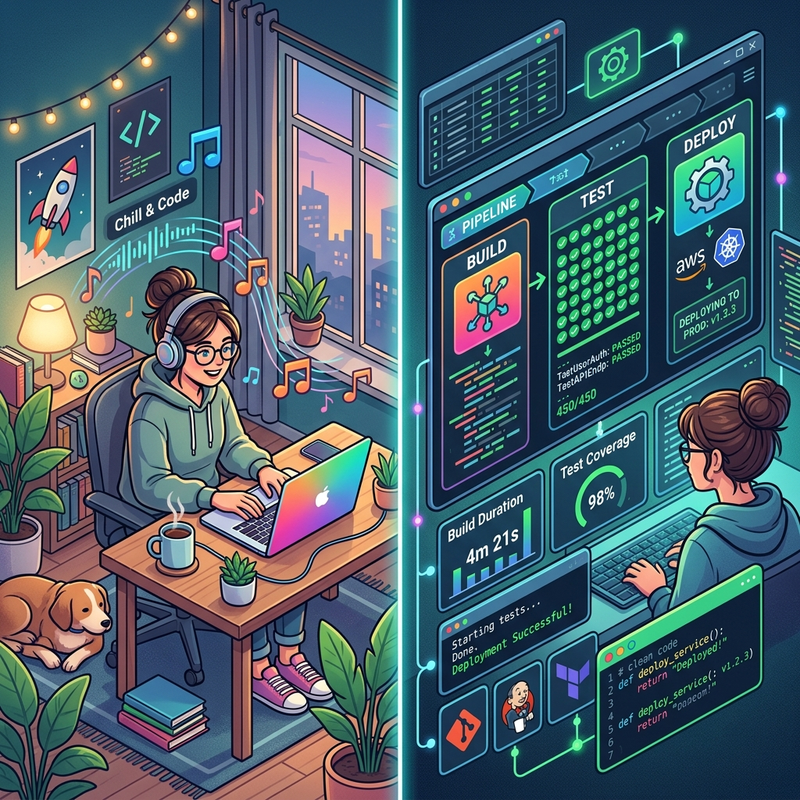
Figure 1: The contrast between the relaxed flow of natural language vibe coding and the strict, automatedautomated validation structures of Agentic Engineering.
Vibe coding is fundamentally an open-loop system. The user inputs a prompt, the model outputs code, and the user copies it to their editor. If the code notionfails, the user copies the error back into the prompt window. This manual context-switching loop is slow, error-prone, and relies entirely on human validation. When a codebase grows beyond a single file, the model's context window fills up, leading to syntax truncation and silent failures.
By contrast, Agentic Engineering builds a closed-loop feedback system. The agent is not just a text generator; it is equipped with tools to read directories, execute commands in isolated terminals, check git status, and run unit tests. If a compile or test run fails, the agent parses the stdout, identifies the bug, rewrites the file, and runs the compiler again. The human developer moves from a manual copy-paste clerk to an programmaticarchitect who defines high-level constraints and approves git diffs.
| Metric | Vibe Coding (Chat-Based) | Agentic Engineering (Closed-Loop) |
|---|---|---|
| Primary Interface | Web GUI Chat / Side-Panel Plugin | Terminal Agent / Integrated Repository Loop |
| Context Management | Manual upload / copy-paste | Automated directory mapping & local indexing |
| Validation Strategy | Vibe Check (Visual inspection on runtime) | Test-Driven Automation (Unit, integration, and lint checks) |
| Production Security | Low (High risk of injecting vulnerability) | High (Pre-commit hooks, sandboxed evaluations) |
| Maintenance Cost | High (Tech debt accumulates rapidly) | Low (Structured refactoring and strict style rules) |
To implement Agentic Engineering, developers must establish an automated execution loop that compiles, runs tests, and pipes logs back to the LLM. Below is a Python orchestration script showing how to run a test harness autonomously, capturing stdout errors to drive self-healing code edits:
import subprocess
import json
def execute_validation_cycle(test_command, file_to_fix):
# 1. Run local test suite
print(f"[Agentic OS] Running: {test_command}")
result = subprocess.run(test_command, shell=True, capture_output=True, text=True)
# 2. Check if tests passed
if result.returncode == 0:
print("[Agentic OS] Build validated successfully!")
return True
# 3. If failed, capture output log and request correction
print("[Agentic OS] Validation failed. Parsing stack trace...")
error_log = result.stderr or result.stdout
# In a real system, the error log and code are sent to the LLM agent
corrected_code = request_llm_fix(file_to_fix, error_log)
# 4. Write fix to file and retry execution
with open(file_to_fix, "w", encoding="utf-8") as f:
f.write(corrected_code)
print("[Agentic OS] Fix written. Restarting verification loop...")
return False
def request_llm_fix(filepath, error_trace):
# Simulated correction - in production, this queries Claude 3.5 Sonnet
return "def compute_total(items):\\
return sum(item.price for item in items if item is not None)"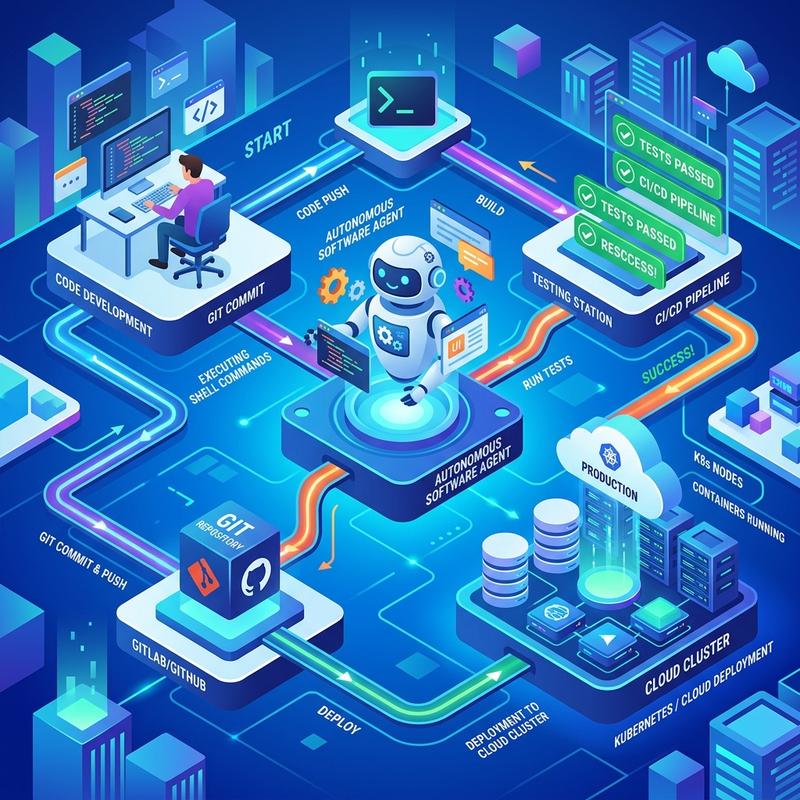 workflow diagram" class="article-detail-image" loading="lazy" width="800" height="800">
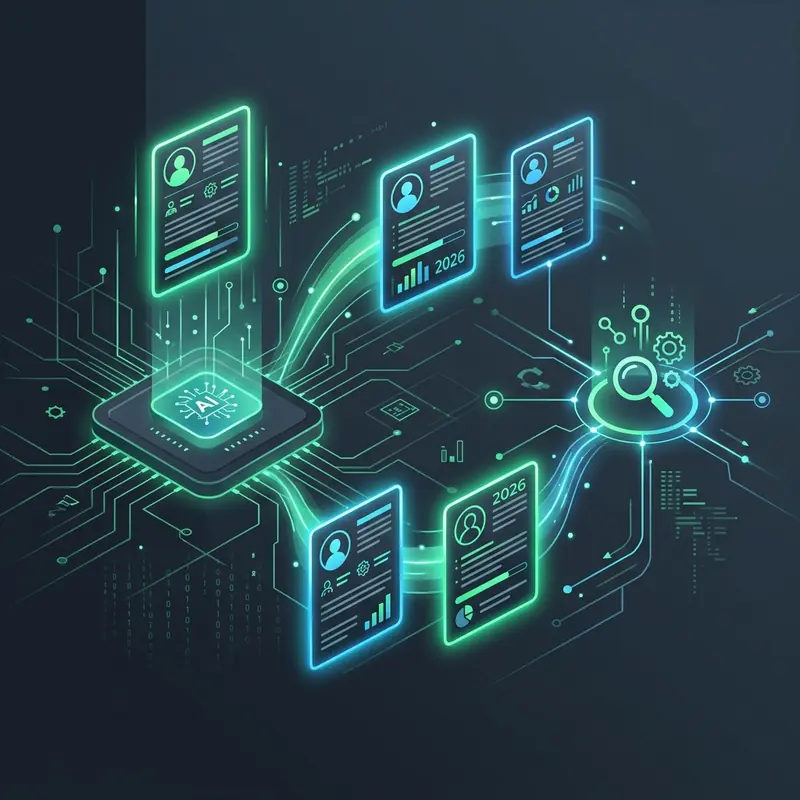
Figure 2: The closed-loop validation pipeline showing automated test parsing, self-healing code modifications, and git staging.
One of the primary dangers of letting autonomous agents write code directly to your codebase is the erosion of architecture patterns. An agent, left to its own devices, will write whatever code satisfies the immediate test case, often introducing duplicate utilities, messy abstractions, or security vulnerabilities.
To mitigate this, teams are standardizing on `.cursorrules` or `.agentrules` configuration files. These files act as system prompts that are automatically injected into the agent's context. By defining strict guidelines (e.g., "Use TypeScript only," "Do not use external CSS libraries," "Enforce US English spelling," "Never use third-party CDN libraries"), you ensure that the generated code conforms to your engineering team's standards, preventing the accumulation of massive AI tech debt.
Vibe coding serves a vital role: it lowers the barrier to entry and allows teams to validate ideas in hours instead of weeks. But when it comes to shipping production systems, developers must transition to Agentic Engineering. By equipping AI agents with terminal tools, sandboxing their executions, and wrapping them in automated validation scripts, organizations can capture the speed of generative AI without sacrificing the security and quality of their software engineering processes.
Consider two real-world scenarios from 2025–2026 that illustrate the difference. A solo founder needed a landing page for a SaaS product demo. She opened Cursor, described the layout in three natural language prompts, and had a fully functional, styled page deployed to Vercel in under 45 minutes. The code wasn't architecturally elegant — it used inline styles, skipped TypeScript, and had no tests — but it served its purpose perfectly. This is classic vibe coding: fast iteration, human-in-the-loop steering, and a "good enough" codebase for a low-stakes deliverable.
Now consider a fintech startup building a payment reconciliation system. The team used Claude Code in agentic mode to generate the entire service layer: database migrations, API endpoints, webhook handlers, retry logic, and reconciliation algorithms. The agent autonomously ran tests after each generation, fixed failures, and produced a codebase that passed their full CI pipeline. The key difference wasn't just the tool — it was the workflow. The agent was given a spec document and a set of acceptance criteria, then operated independently for 20-minute stretches before reporting back. The human engineers reviewed outputs, refined the spec, and let the agent continue. The result was production-grade code generated at roughly 3x the speed of manual development.
A third example shows the hybrid in action: a healthcare startup building an internal dashboard for patient analytics. They used vibe coding for the frontend — rapid prototyping with Cursor to nail down the UX and data visualization layout — while using agentic engineering for the backend data pipeline, where correctness, HIPAA compliance, and error handling were non-negotiable. The frontend went through 15 rapid iterations in a day; the backend was generated once, reviewed carefully, and deployed with confidence.
The decision framework is straightforward once you map it to your project's risk profile. Use vibe coding when: the stakes are low (prototypes, internal tools, demos), iteration speed matters more than code quality, you're exploring a new domain or API and need quick feedback, or the codebase has a short expected lifespan. Vibe coding excels in the "throwaway" category — proof-of-concept scripts, hackathon projects, marketing landing pages, and data exploration notebooks where the code is the process, not the product.
Use agentic engineering when: the code handles money, health data, or security-sensitive operations, you need comprehensive test coverage from day one, the project will be maintained by a team for months or years, or regulatory compliance requires auditable, well-structured code. Agentic workflows are also superior when you have a clear, detailed specification — agents thrive on unambiguous requirements and deterministic acceptance criteria.
The mistake many teams make is defaulting to one approach for everything. A common anti-pattern is using agentic engineering for prototypes (wasting time on over-engineering throwaway code) or using vibe coding for production systems (accumulating technical debt that costs 5–10x more to fix later). The skill is recognizing which mode fits the current phase of your project.
The most effective teams in 2026 are blending both approaches strategically. The pattern looks like this: start with vibe coding to explore the solution space, identify the hard problems, and establish a rough architecture. Once you understand the domain, switch to agentic engineering for the core logic, data models, and integration layers. Then return to vibe coding for UI polish, documentation, and edge-case handling. This "vibe-agentic-vibe" sandwich gives you speed where it's safe and rigor where it matters.
Toolchains are evolving to support this hybrid. MCP-enabled IDEs now allow developers to switch between chat-based prototyping and autonomous agent modes within the same session, maintaining context across transitions. The key is setting clear boundaries: tell the agent exactly when to operate independently (backend services, test generation) and when to wait for human input (UI decisions, business logic approval, deployment). Teams that master this hybrid approach report 2–4x productivity gains compared to pure manual development, without the quality compromises of pure vibe coding.