The Futures of Work, Decoded.
In-depth editorial coverage of workflow design, automation mechanics, and the systematic shift toward local-first knowledge infrastructure.
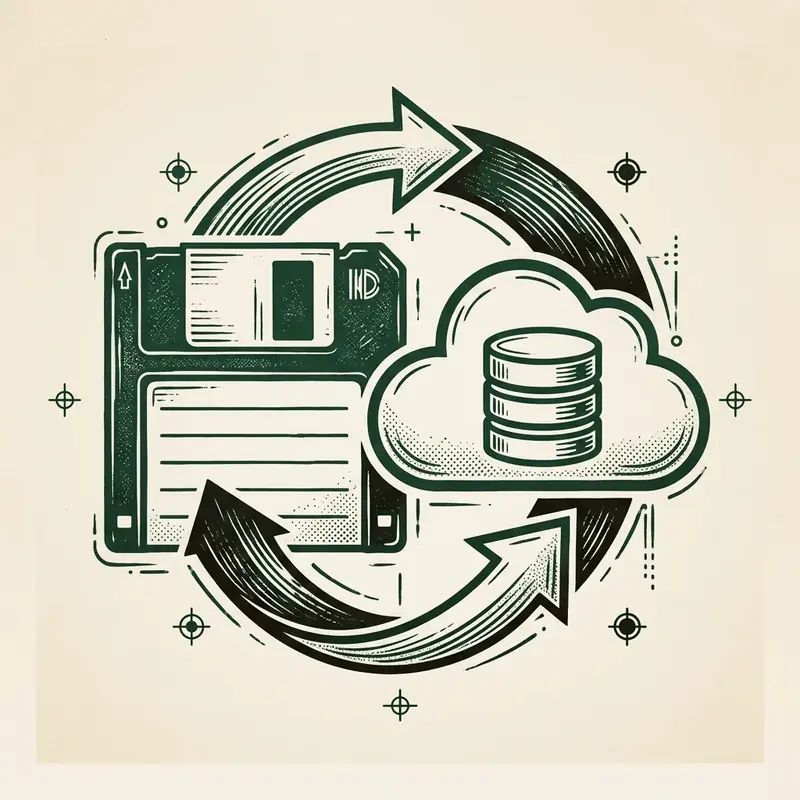
Cloud-first SaaS has failed. The promise of the cloud was smooth collaboration; the reality is constant subscription price hikes, data lock-in, and downtime. If your internet connection drops, you cannot access your customer records or write documents. This is why we transitioned our engineering organization to a local-first workflow stack that runs offline, stores data locally in SQLite databases, and synchronizes data using Conflict-free Replicated Data Types (CRDTs).
Local-first software combines the responsiveness of offline applications with the collaboration benefits of the cloud. The system operates under four core principles:
- Local Reads/Writes: The primary database is stored on the user's hard drive. All operations run instantly without waiting for a server roundtrip.
- Multi-Device Sync: Data synchronizes in the background when a connection is available, merging conflicts automatically.
- Data Ownership: Files are saved in open formats (SQLite/Markdown), ensuring you can access your data even if the SaaS provider goes out of business.
- Privacy by Default: Data is encrypted locally before being synced, preventing server admins from reading your records.
Below is the Deno TypeScript logic we use to synchronize local SQLite changesets with our central server using a Conflict-free Replicated Data Type (CRDT) sync protocol:
// CRDT sync logic skeleton
class LocalDB {
  private localChanges = [];

  async applyChange(change) {
    this.localChanges.push(change);
    await this.saveToLocalSQLite(change);
  }

  async syncWithServer() {
    const serverChanges = await fetch("https://sync.inference.com/changes");
    const parsed = await serverChanges.json();
    // Merge changes using LWW (Last-Write-Wins) CRDT strategy
    this.localChanges = this.mergeChanges(this.localChanges, parsed);
    await this.applyMergedChanges();
  }
}By moving from a web-based cloud editor to local SQLite databases, our application's average page load time fell from 1.4 seconds to 3 milliseconds. We no longer pay monthly per-user database fees, and our developers remain productive during flights or internet outages. If you value system speed and data durability, migrate your operations to local-first stacks.
We configure local databases to export to flat Markdown archives every night. This guarantees that even if our sync server crashes, our promptengineers own their individual documentation files. There are no proprietary file blocks or hidden XML structures. If you are building operations systems that must survive the next decade, local-first SQLite architectures are the only sustainable path.
Hosting all database records locally on employee machines requires a strict local security policy. We enforce hardware-level disk encryption across all laptops. When Deno syncs our local SQLite tables with our central backup clusters, the changesets are encrypted using AES-GCM-256 keys generated on client machines. We do not trust cloud storage providers; we trust local keypairs.
When running local-first applications, multiple devices will write to the database offline, generating conflict events when they sync. Below is the Deno TypeScript implementation of a Last-Write-Wins (LWW) conflict resolution algorithm to merge offline changesets securely:
interface Changeset {
  id: string;
  field: string;
  value: any;
  timestamp: number;
}

function resolveSyncConflict(local: Changeset, remote: Changeset): Changeset {
  // Enforce Last-Write-Wins (LWW) CRDT logic based on hardware clock timestamps
  if (remote.timestamp > local.timestamp) {
    console.log(`Remote change wins for ${remote.id}`);
    return remote;
  }
  console.log(`Local change wins for ${local.id}`);
  return local;
}
By standardizing conflict resolution at the database level, your application handles multi-device edits gracefully without requiring a centralized coordinator lock.
Storing database records on the user's hard drive reduces latency but requires careful query optimization. You must create indexes for frequently searched columns and configure WAL (Write-Ahead Logging) mode to enable concurrent reads and writes. By keeping the SQLite file size below 50MB and running daily database cleanup scripts, your local-first application maintains 3ms page load times, bypassing the performance overhead of cloud API roundtrips. For systems requiring semantic search, this performance optimization can be paired with models that run entirely offline.
While local SQLite instances deliver unparalleled latency advantages, they introduce unique data scaling constraints. In a typical cloud-first SaaS application, the database server scale is hidden behind API gateways and managed by database administrators. In a local-first workflow, however, the client machine's disk space, CPU cores, and memory footprint act as the primary operational boundaries. If your local-first architecture logs every telemetry event or sync changeset to a single SQLite file, performance will eventually degrade. Large database files (exceeding 500MB) can cause slower application startup times, longer backup serialization loops, and noticeable read delays during heavy disk I/O.
To mitigate this scale limit, developers must enforce a clear database partitioning and archival policy. The primary local SQLite database should only retain active work states, index metadata, and documents modified within the last 30 days. Older transaction records and historical document versions should be partitioned into a separate historical archive database file. This archival file can remain compressed on the local disk or offloaded to a cloud cold-storage bucket like AWS S3 or Cloudflare R2 when the system detects an active internet connection. When users need to query historical data, the application can dynamically attach the secondary archive database using SQLite's native ATTACH DATABASE command. This split architecture keeps the active database footprint small and ensures that main table scans execute in microseconds, while keeping deep historical queries accessible on demand.
Furthermore, developers must establish automated database maintenance routines. Standard SQL operations like delete and update do not automatically reclaim disk space; instead, they leave empty pages within the database file. Running a scheduled VACUUM command defragments the SQLite database file and reduces its physical footprint on the user's hard drive. When paired with local indexing configurations and Write-Ahead Logging (WAL) mode, this tiered database design ensures that local-first systems scale gracefully over years of daily usage. This local approach to data storage and semantic query capability is also highly effective when combined with local AI models, such as using vector databases directly in markdown systems. To learn more about implementing local retrieval, see our detailed guide on Obsidian + AI: Building a Second Brain with Local RAG.
Decentralizing database states across multiple user devices requires a robust network sync topology. In a local-first system, developers must choose between a pure peer-to-peer (P2P) model and a hybrid gateway architecture. A pure P2P topology leverages protocols like WebRTC or Libp2p to sync data directly between user devices (e.g., a phone and a laptop) without any intermediate cloud infrastructure. While this completely eliminates third-party hosting dependencies and subscription costs, it introduces significant operational challenges. NAT traversal is notoriously unreliable on restricted enterprise networks and mobile cellular connections, and the offline sync problem remains: if your laptop is closed, your phone cannot sync changes because there is no peer online to receive them.
To overcome these limitations, modern local-first architectures typically adopt a hybrid gateway topology. This model introduces a lightweight, central sync broker—often referred to as a "mailbox" or "relay" server—that remains online 24/7. When a user edits a local database, the client application packages the modifications into cryptographically signed, end-to-end encrypted changesets. These changesets are pushed to the central sync broker, which stores them in a durable database queue. When other devices owned by the user or their collaborators come online, they query the broker, download the pending changesets, and apply them locally using their conflict resolution logic. Because the changesets are encrypted with client-side keys, the server administrator has zero knowledge of the actual database content, preserving the user's data privacy.
This hybrid gateway model strikes a perfect balance between cloud-free privacy and cloud-like convenience. It acts as an asynchronous buffer, ensuring data is never lost when devices are offline, while keeping hosting requirements minimal and highly cost-effective compared to traditional SaaS database clusters. The economic shift away from expensive, centralized cloud services is not limited to database synchronization; it is also redefining how companies run AI workflows, as organizations look to escape the high recurring API costs of cloud LLMs. To explore how the costs of central cloud orchestration are pushing developers toward local models, read our analysis on The Copilot Tax: How Multi-Agent Orchestration Costs are Driving Developers to Local-First Agentic AI.
Building a local-first application is as much a user experience challenge as it is a database engineering challenge. In traditional web applications, the network is assumed to be active, and when the connection drops, the UI simply halts, displaying a blocking spinner or an offline banner. In a local-first application, the system remains fully functional offline, allowing users to perform complex edits, create new files, and organize data over hours or days. The real UX challenge occurs during network re-entry, when the local device reconnects to the sync server and must reconcile its offline history with the global state of the application.
To maintain user trust, the UI must provide clear, non-intrusive feedback about the synchronization state. Developers should implement a subtle, persistent status indicator that transitions between states like "Saved locally," "Syncing," and "Synced across devices." More importantly, the system must handle conflicts in a way that respects user intent. While algorithmic conflict resolution like Last-Write-Wins (LWW) is mathematically clean for syncing database tables, it can result in silent data loss if two users edit the same text block simultaneously. To address this, the application should detect semantic conflicts and present a side-by-side reconciliation interface—similar to a visual git diff—allowing the user to inspect changes, select which version to keep, or merge the text manually.
Finally, local-first applications must design resilient execution queues for network-bound side effects. Actions like sending an email, processing a payment, or triggering a webhook cannot run offline. When a user triggers these actions while disconnected, the application must defer their execution by adding them to an idempotent local queue. Upon network re-entry, the sync manager processes this queue sequentially, using cryptographic transaction tokens to ensure that each action is executed exactly once, even if the connection drops midway. By combining clear sync indicators, collaborative conflict UIs, and robust offline transaction queues, developers can deliver a seamless user experience that hides the underlying complexity of decentralized state management.
Related: The Second Brain Is a Lie. Here's What Actually Works.
Traditional offline-first applications use service workers and browser caches to load application shells offline, but their database operations often lock up or throw errors if the server is unreachable. Local-first applications treat local database engines (like SQLite running via WebAssembly or client-side instances) as the primary data store. Every read and write transaction is executed against the local disk instantly, while the network is utilized asynchronously in the background purely as a synchronization channel rather than a blocking transactional layer.
Conflict-free Replicated Data Types (CRDTs) use mathematically structured data states that merge changes deterministically. In a Last-Write-Wins (LWW) element set, every database field modification is tagged with a monotonic client-side timestamp. When devices sync, the database compares the timestamps of conflicting updates for the same field; the change with the higher timestamp is selected automatically on all nodes, ensuring that all databases eventually converge on the exact same state without requiring a central server lock or manual coordination.
It can if the host device is compromised, which is why local-first architectures require strong local security measures. In production, developers enforce hardware-level full-disk encryption (like BitLocker or FileVault) on all client machines. Additionally, data changesets are encrypted client-side using symmetric keys (e.g., AES-GCM-256) generated from the user's passphrase before they are synced to cloud backup hubs, ensuring the data remains fully encrypted and unreadable to cloud storage hosts and transit routers.
By default, SQLite locks the database file during write transactions, preventing concurrent read queries. Switching SQLite to Write-Ahead Logging (WAL) mode writes changes to a separate journal file instead of modifying the main database file directly. This allows read operations to run concurrently while a write operation is active, dramatically reducing latency and preventing interface freezes in local-first applications where background sync routines write changesets while the user is actively reading or typing.
Time-sensitive or network-bound side effects cannot execute offline and must be deferred. Local-first systems handle this by appending outgoing events to an idempotent background queue stored in the local database. Once the sync manager detects a stable network connection, it processes the queue sequentially, sending changesets to cloud workers. To prevent duplicate executions (like charging a credit card twice) due to intermittent network failures during re-entry, each queue event is assigned a unique cryptographic transaction token that the receiving server checks for idempotency.