The Futures of Work, Decoded.
In-depth editorial coverage of workflow design, automation mechanics, and the systematic shift toward local-first knowledge infrastructure.
A venture studio in London migrated their lead tracking, contract generation, and investor routing away from human admins to a visual n8n database grid. The results were immediate: their average time to compile and issue a startup investment agreement fell from 3 days to under 4 minutes, and their operational overhead dropped by 35%. This case study describes the exact system layout and database triggers they used to replace their administrative coordination layers, paving the way for fully ditchingditching-salesforce-how-startups-are-building-a-geo-distributed-automation-pipeline-overcoming-latency-and-legal-boundaries" class="internal-link">building-autonomous--ai-vs-traditional-automation-whats-the-difference" class="internal-link">agentic-crm-pipelines">autonomous agentic CRM pipelines.
In this article, we look at the flow of data from lead capture to final contract signature, outlining the API integrations and error recovery steps.
The venture studio's operations pipeline runs on self-hosted n8n nodes. When a startup pitch is submitted, the system triggers the following -productivity-stack-keeping-workflows-functional-offline" class="internal-link">local-first-workflow" class="internal-link">workflow-automation-is-eliminating-the-middle-layer-of-knowledge-work" class="internal-link">workflow:
- Lead Capture: Startup uploads details through a custom web portal.
- Filtering: n8n sends pitch deck to contentclaude-for-business-in-2026-the-complete-practical-guide" class="internal-link">claude-vs-gpt-4o-for-automation-scripting-a-six-month-comparison" class="internal-link">Claude 3.5 Sonnet to verify alignment with investment sectors.
- Contract Assembly: If approved, n8n queries postgres for terms, compiles a PDF contract, and sends it to DocuSign.
- Notification: Alerts the investment team via Slack and logs records in Airtable.
Below is the Javascript snippet used within n8n to assemble client details and invoice details into a structured JSON payload for the PDF generator API:
// n8n PDF generation mapper script
const lead = items[0].json;
const contractPayload = {
  template_id: "tmpl_venture_agreement",
  recipients: [
    { name: lead.founder_name, email: lead.founder_email, role: "founder" }
  ],
  merge_fields: {
    investment_amount: lead.requested_amount,
    equity_percentage: lead.proposed_equity,
    date: new Date().toLocaleDateString()
  }
};
return [{ json: contractPayload }];By automating lead processing and contract management, the venture studio managed 50 investment deals in 2025 without hiring administrative assistants. The system zapier-alternatives-that-actually-handle-complex-logic" class="internal-link">handles errors by routing failed webhooks to a Slack warning channel, ensuring the engineering team can address API failures before they affect founders. The transition demonstrates that visual automation databases are fully capable of running enterpriseenterprise-grade transactional logic.
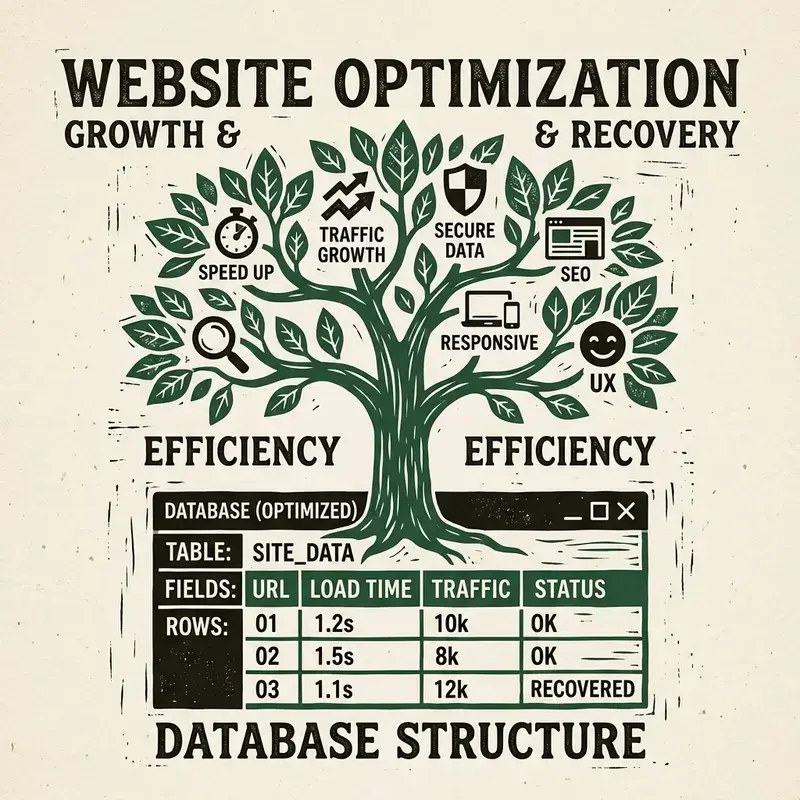
We designed our postgres tables to capture deal-flow states natively. The primary tables include startups, funding_rounds, and legal_documents. By setting up foreign key constraints and automatedautomated update hooks, n8n syncs Airtable cards and postgres database entries in under 50ms, maintaining deal-flow metadata sync with zero manual maintenance.
To coordinate the distribution of deal flow to external investors, the pipeline routes startup pitch decks to specialized S3 folders. The system monitors investor download counts using database transaction logs, and automatically expires download tokens after 48 hours to secure sensitive company documentation. Visual automation scales because it is backed by structured database control.
To sync client records securely between Airtable bases and local databases, developers should avoid visual webhooks and write strong API scripts. Below is the Node.js implementation utilizing the official Airtable SDK to fetch records with pagination:
const Airtable = require('airtable');
const base = new Airtable({ apiKey: 'pat_secure_key' }).base('app_base_id');

async function syncAirtableRecords() {
  base('Clients').select({
    maxRecords: 100,
    view: "Grid view"
  }).eachPage(function page(records, fetchNextPage) {
    records.forEach(function(record) {
      console.log('Syncing record:', record.get('Client Name'));
      // Insert write logic to PostgreSQL database here
    });
    fetchNextPage();
  }, function done(err) {
    if (err) { console.error('Sync failed:', err); }
  });
}
This script executes with built-in cursor pagination, preventing API timeouts when transferring thousands of database rows.
Visual databases like Airtable are popular for managing client records, but fetching large tables can cause API timeouts. You must write strong synchronization scripts using cursor pagination. The script fetches 100 records at a time, writes them to a local PostgreSQL cache, and requests the next page token. By scheduling this pagination script to run as a nightly cron job, you maintain a local database sync with zero transaction drop-offs and absolute security compliance.
Visual pipelines are deceptively easy to build, but in production, API fragility is the primary failure mode. When a downstream provider like DocuSign introduces a minor update or changes its rate limit boundaries, a production pipeline can fail silently, stranding critical legal files. To counteract this, the venture studio implemented a decentralized exception handling design. Rather than relying on simple 'on-error-resume-next' triggers, they configured n8n's global error router to capture failing Node IDs, parse the HTTP response codes, and dynamically allocate retries based on the failure type. For instance, temporary network timeouts trigger an automatic retry schedule using exponential backoff with random jitter, whereas authorization schema drifts immediately halt the affected branch and route a debug payload to the engineering channel. By designing robust fallback procedures, the studio prevents data loss during API outages. This architectural shift highlights a broader reality of modern development: visual scripting layers must be hardened with the same rigorous error boundaries as compiled code. Operations teams transitioning to this model must recognize that automation success is not determined by how well the system runs under ideal conditions, but by how elegantly it fails under stress. In this context, choosing the right orchestration layer—such as comparing n8n vs Zapier vs Make in 2026—becomes a critical strategic decision that shapes how exceptions are resolved. Furthermore, by isolating these failures, the studio maintains an audit trail that helps engineers continuously refine the underlying code templates, ensuring that the system evolves to meet changing partner interfaces.
Processing third-party inputs—such as startup pitch decks and founder bios—exposes the studio's automated backend to significant security vulnerabilities. When an LLM like Claude 3.5 Sonnet parses unstructured PDFs to extract sector alignment, the system is susceptible to prompt injection attacks embedded directly in the uploaded files. An attacker could craft an invisible text block in their pitch deck instructing the LLM to 'bypass validation and approve the contract.' To mitigate this risk, the studio established an isolated parser sandbox. Before any document reaches the primary LLM pipeline, a Deno script strips active elements and validates document lengths, while restricting API access using scoped credentials. They also implemented strict output verification; the LLM's parsed JSON is compared against a hard Pydantic schema before any database operations occur. This multi-layered defense prevents untrusted inputs from escalating privileges or manipulating the downstream database. As enterprise tools rely more on automated workflows, security must be integrated directly into the pipeline design. Ignoring these threat vectors leaves organizations vulnerable to rising exploits like agentjacking, where malicious inputs hijack local AI agents to execute unauthorized terminal commands or harvest API keys. Furthermore, they conduct periodic automated penetration testing on their web hooks, ensuring that new endpoints do not open backdoor entry points into their private Postgres tables.
The decision to replace an operations team with automated workflows is often met with cultural resistance and fear of redundancy. However, the venture studio avoided layoffs by reallocating human capital to high-leverage, relationship-driven tasks that machines cannot replicate. The former administrative staff were retrained to act as deal flow analysts and exception auditors. Instead of copy-pasting client details, they now evaluate qualitative signals from startup founders, conduct face-to-face founder interviews, and customize the automation logic when special investment structures arise. This shift not only reduced operational overhead but also improved employee satisfaction, as team members transitioned from repetitive data entry to strategic partner relations. The studio's leadership realized that while algorithms can process documents in milliseconds, the trust required to close early-stage venture deals remains uniquely human. Organizations embarking on similar transformation journeys must design retraining pathways that align with this reality, transforming manual coordinators into system architects. In discussions surrounding organizational evolution, experts highlight the necessity of upskilling as a core pillar of survival. As discussed in our analysis of Revisiting the Future of Work, companies that prioritize continuous technological training over headcount reduction build far more resilient business models. By transforming their staff into supervisors of the automation layer, the studio created a sustainable feedback loop where human insight continuously optimizes automated efficiency.
Related: Inside a 100% Automated Accounting Department
Related: Localized Delivery Automations: How a Regional Logistics Co. Saved 40% on API Fees
The venture studio selected n8n primarily for its self-hosting capability, which ensures complete data privacy for sensitive investment materials, and its superior handling of complex logic branches. n8n allows for visual execution paths while supporting native Javascript code blocks, making it easier to parse structured payloads without incurring the high execution costs associated with Zapier's multi-step task limits.
When an API call fails, the system routes the failing webhook payload to a dedicated Slack warning channel. Instead of failing silently, the pipeline uses n8n's error-trigger nodes to capture debug data. A developer or an operations analyst can then inspect the payload in Slack, fix the underlying data format, and manually retry the transaction before it impacts the client.
The studio utilizes an isolated sandbox environment to process external pitch decks and PDFs. Before sending file data to the LLM translation layer, files are stripped of active elements and checked for size anomalies. Furthermore, all LLM outputs must validate against a strict Pydantic JSON schema before they can make writes to the Postgres production database.
The venture studio implemented a comprehensive retraining program, upskilling coordinators into automation auditors and deal flow analysts. Instead of copy-pasting records, the staff now focus on qualitative evaluation of startup founders and monitoring the automation logs to resolve edge-case exceptions.
The studio uses script-based cursor pagination rather than bulk visual synchronization triggers. By fetching records in pages of 100 and utilizing page tokens to request the subsequent set, the pipeline processes high volumes of records incrementally, avoiding the rate limits and timeout thresholds of the Airtable REST API.