The Futures of Work, Decoded.
In-depth editorial coverage of workflow design, automation mechanics, and the systematic shift toward local-first knowledge infrastructure.

When autonomous coding agents first hit the developer scene, the promise was total autonomy. Startups advertised agents that could read an entire repository, write hundreds of lines of code, commit the modifications, and push directly to staging without human oversight. However, as senior software teams deployed these systems in high-scale production environments, they hit a hard wall of reliability. Agents got caught in infinite loops, introduced undetected memory leaks, and overwrote critical logicic. The developer community is realizing that treating LLMs as independent autonomous actors is an architectural anti-pattern. Instead, the industry is shifting toward **Harness Engineering**\\u2014the practice of buildinglding strict, deterministic "outer loops" (type checkers, testing containers, and static compilation gates) that surround, validate, and constrain LLM outputs.
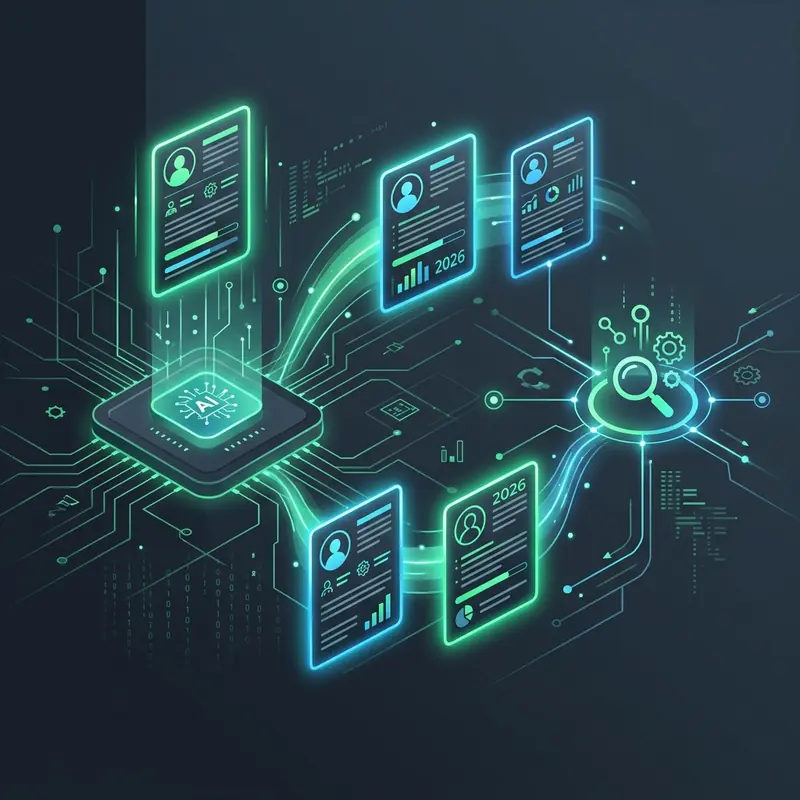
Figure 1: Harness Engineering: Wrapping the raw generative model core with deterministic compile, test, and security rings.
Why do raw agents fail? An LLM is, at its core, a probabilistic token predictor. It does not possess a compiler, a memory space, or a conceptual model of execution. When an agent is given direct write access to a filesystem, it behaves like an unaudited junior developer. It writes code that *looks* syntactically correct, but may fail during execution due to runtime errors, missing imports, or security vulnerabilities. The risks of unchecked agentic execution fall into notionthree categories:
- **Runaway Writes**: An agent attempting to debug a compile error might continuously rewrite files, eventually corrupting the codebase or causing runaway disk utilization.
- **The Hallucinated Dependency Trap**: Agents often import third-party packages that do not exist, exposing the system to dependency confusion attacks or compiler failures.
- **State Drift**: Because agents run asynchronously, they can read file state at time T1, make changes, and write at T2, overriding concurrent changes and causing state drift.
| Dimension | Raw Agent Autonomy | Harness Loop Architecture |
|---|---|---|
| Write Target | Directly to the active codebase filesystem | An isolated sandbox jail directory |
| Validation Phase | None, or left to post-commit CI/CD runs | Pre-write compilation, linting, and unit testing |
| Execution Safety | High-risk; agent can overwrite active processes | Zero-risk; runs inside secure sandboxed Docker jails |
| Control Mechanism | System promptprompts and raw LLM decision gates | Deterministic loop scripts (Python, Node) wrapping LLM calls |
| Reliability Rate | Low (frequent compile and runtime breaks) | High (only code that compiles and passes tests is saved) |
Harness Engineering shifts the focus from writing the perfect system prompt to designing the perfect validation pipeline. A modern software harness wraps the LLM query in a multi-stage validation loop. Below is a conceptual implementation of a Python verification harness. It takes an agent's code proposal, writes it to a temporary sandbox directory, compiles it, and executes unit tests. If the compilation or tests fail, the harness feeds the exact error logs *back* to the LLM, forcing it to debug itself until it produces certified, compilable code:
import subprocess
import os

class SoftwareHarness:
    def __init__(self, sandbox_dir="sandbox"):
        self.sandbox = sandbox_dir
        os.makedirs(self.sandbox, exist_ok=True)

    def validate_proposal(self, filename, code_content, test_command):
        # 1. Write proposed code to isolated sandbox jail
        temp_file_path = os.path.join(self.sandbox, filename)
        with open(temp_file_path, "w") as f:
            f.write(code_content)

        # 2. Compile and syntax check
        compile_result = subprocess.run(
            ["python", "-m", "py_compile", temp_file_path],
            capture_output=True, text=True
        )
        if compile_result.returncode != 0:
            return False, f"Syntax Error: {compile_result.stderr}"

        # 3. Run test suite inside sandbox
        test_result = subprocess.run(
            test_command, cwd=self.sandbox,
            capture_output=True, text=True, shell=True
        )
        if test_result.returncode != 0:
            return False, f"Test Suite Failed: {test_result.stderr}"

        return True, "Code successfully compiled and validated."
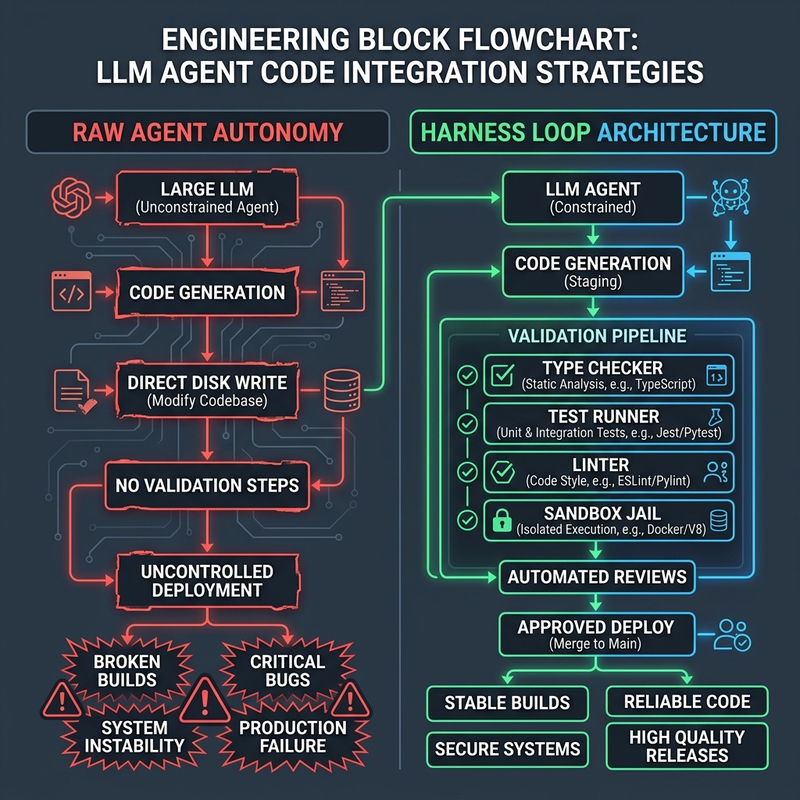
Figure 2: The contrast: raw agentic disk writes vs. the self-correcting Harness Loop pipeline that guarantees compilable commits.
Once a single-agent harness is in place, developers can scale the architecture to multi-agent loops. Instead of asking one model to plan, code, write tests, and deploy, the loop orchestrator coordinates teams of specialized, micro-prompted agents. A dedicated *Product Agent* defines the requirement, a *Coding Agent* writes the implementation in the sandbox, a *QA Agent* drafts test cases, and the *Harness Compiler* runs the loop. The code is only committed to the main branch when every agent's contribution has compiled and passed the testing suite.
The transition from raw agent autonomy to Harness Engineering represents the maturity phase of AI software development. By treating LLMs as probabilistic code generators and wrapping them in deterministic verification harnesses, developers can harness the speed of AI without sacrificing the reliability of search-beyond-the-traditional-seo-playbook" class="internal-link">traditional engineering. Understanding loop orchestration, sandbox compilers, and automated verification is the key to building stable, AI-native software architectures.
A harness in n8n is a meta-workflow that controls, monitors, and orchestrates one or more sub-workflows (the agents or tasks being harnessed). The fundamental pattern is: trigger, evaluate, dispatch, loop. Let us build a concrete example: a content generation harness that orchestrates a writing agent, a fact-checking agent, and an SEO optimization agent in a controlled loop.
Step 1: Create the harness workflow. In n8n, create a new workflow and add a Webhook trigger node. This webhook receives the initial content request (topic, target keywords, word count). Connect it to a Code node that initializes your harness state: { "topic": $input.item.json.topic, "iteration": 0, "maxIterations": 3, "status": "draft" }. This state object is the heartbeat of your harness. It tracks progress, enforces limits, and communicates between iterations.
Step 2: Add the loop controller. Insert an IF node that checks $json.iteration < $json.maxIterations && $json.status !== "complete". This is your loop boundary. The loop controller is what separates a harness from a simple linear workflow. It creates a bounded iteration space where agents can operate repeatedly until quality criteria are met or limits are reached. Connect the true branch to the agent dispatch sequence and the false branch to a final output node.
Step 3: Dispatch to agents. Inside the loop, create a sequence of HTTP Request nodes that call your AI agents. First, call the writing agent with the topic and iteration count. Use the response to update the harness state. Then call the fact-checking agent, which returns a confidence score. If the confidence is below 0.85, set the status to "needs revision" and let the loop continue. If it is above 0.85, call the SEO optimization agent. This sequential dispatch with quality gates ensures each agent's output is validated before the next agent consumes it.
Step 4: Implement the feedback loop. After all agents have run, use another Code node to evaluate the overall quality. Compare the current iteration's output against the previous one using a simple quality metric such as readability score, keyword density, or fact-check confidence. If the quality has improved and meets your threshold, set status to "complete". If not, increment the iteration counter and let the loop run again. This feedback mechanism is what makes loop-based orchestration powerful. It creates a self-improving pipeline that converges on quality.
Step 5: Add safety rails. Connect an Error Trigger node to catch failures at any stage. Implement timeout logic using n8n's Wait node with a maximum duration. Add a notification node (Slack, email) that alerts your team if the harness exceeds iteration limits or encounters repeated failures. These safety rails prevent runaway loops and ensure operational visibility.
The complete harness looks deceptively simple: a trigger, a loop controller, a few agent calls, and an exit condition. But the simplicity is the point. The harness enforces structure without micromanaging the agents inside it, which is exactly the balance that raw agentic AI fails to achieve.
Loop-based orchestration systems generate a unique observability challenge: each iteration produces logs, metrics, and traces that must be correlated to understand system behavior. Without proper monitoring, a harness with a feedback loop can silently degrade, producing increasingly poor outputs without anyone noticing until the iteration limit is reached.
Structured logging is non-negotiable. Every harness node should emit structured JSON logs with a consistent schema: { "harness_id": "...", "iteration": 3, "agent": "fact-checker", "input_tokens": 1250, "output_tokens": 340, "quality_score": 0.82, "latency_ms": 2340, "status": "pass" }. This schema enables you to query across iterations, filter by agent, and track quality trends over time. Use a centralized logging platform (Grafana Loki, Datadog, or even a simple Elasticsearch instance) to aggregate these logs and build dashboards that visualize harness behavior.
Key metrics to track per harness run include iteration count (how many loops executed), total latency (end-to-end time), per-agent latency (which agent is the bottleneck), quality score progression (is quality improving each iteration?), token consumption per iteration (are costs increasing?), and convergence rate (how many iterations to reach the quality threshold). Set up alerts for anomalies: if iteration count consistently hits the maximum, your quality thresholds may be too aggressive; if a specific agent's latency spikes, there may be a model or infrastructure issue.
Distributed tracing across iterations is essential for debugging harness behavior. Assign a unique harness_run_id to each execution and propagate it through all agent calls. Use OpenTelemetry or a similar tracing library to create spans for each iteration and each agent call within that iteration. This gives you a waterfall view of exactly where time is spent, which agents are correlated with quality improvements, and where bottlenecks occur. Tools like Jaeger or Zipkin can visualize these traces and help you identify patterns that are not visible in aggregate metrics.
Cost tracking per harness run is critical for production systems. Since each iteration consumes tokens and compute resources, costs can spiral quickly if the harness does not converge. Implement a budget guard that tracks cumulative token usage across iterations and terminates the harness if costs exceed a threshold. Many teams set a per-run budget of $0.50-$2.00 for content generation harnesses, which typically allows 2-3 iterations with good quality outcomes.
Loop-based orchestration introduces failure modes that do not exist in linear workflows. Understanding these patterns and designing prevention mechanisms is essential for production reliability.
Failure Pattern 1: Oscillation. This occurs when the quality score bounces between two values across iterations without converging. Agent A improves the output, Agent B regresses it, Agent A fixes Agent B's regression, and the cycle repeats. Prevention: implement a convergence detector that compares quality scores across the last three iterations. If the standard deviation is below a threshold and no iteration exceeds the quality target, terminate the harness with a warning. Alternatively, add a tie-breaker agent that resolves conflicts between oscillating agents.
Failure Pattern 2: Degradation loops. Sometimes the feedback loop makes things worse instead of better. An agent over-corrects a perceived issue, creating new problems that the next iteration tries to fix, spiraling into increasingly poor output. Prevention: always compare the current iteration's output against the original input, not just the previous iteration. Implement a high water mark that tracks the best quality score seen so far, and terminate if the current iteration falls below 80% of the high water mark after two consecutive declines.
Failure Pattern 3: State corruption. In complex harnesses with multiple parallel agents, race conditions can corrupt the shared state object. Agent A reads state while Agent B is writing it, leading to inconsistent data that causes downstream agents to fail. Prevention: use n8n's built-in node execution ordering to serialize state access. If parallel execution is necessary, implement optimistic locking with version numbers in the state object. Each agent reads the version, does its work, and only writes if the version has not changed.
Failure Pattern 4: Silent failures. An agent returns a seemingly valid response that contains subtle errors (hallucinated facts, incorrect code, malformed data) that propagate through subsequent iterations. Prevention: add validation gates between agents that check output structure (is it valid JSON? does it have required fields?) and content quality (are there hallucination markers? do code blocks compile?). Use agentic engineering guardrails to enforce output schemas and catch structural errors before they compound.
These failure patterns share a common root cause: the loop amplifies small errors over iterations. The solution is always the same: quality gates, convergence detection, and circuit breakers. A well-designed harness is not one that never fails. It is one that detects failures quickly and degrades gracefully rather than spiraling into chaos. For teams building their first production harnesses, start with simple single-agent loops and add complexity only after you have mastered monitoring and failure handling for the basic pattern.
A basic AI harness in n8n starts with a webhook trigger, followed by an LLM node, then a conditional check that validates the output. If the output passes validation, it proceeds to the next step. If it fails, it either retries with a modified prompt or escalates to a human reviewer. This loop-verify-execute pattern is the foundation of harness engineering. The n8n workflow definition stays under 50 lines of JSON, making it easy to version control and audit.
Add a budget counter node that tracks token consumption across iterations. Set a hard limit — if the loop consumes more than 5,000 tokens without producing a valid output, it stops and reports the failure. This prevents runaway loops that drain your API budget. For production workflows, add a logging node that captures every iteration with timestamps, input prompts, output content, and validation results.
Traditional monitoring tracks response times and error rates. Loop-based AI systems need additional metrics: average iterations per task, success rate per iteration, token consumption distribution, and escalation frequency. Set up dashboards that track these metrics in real time. An increasing average iteration count signals quality degradation in your prompts or model. A spike in escalation frequency means your validation criteria may be too strict or your model performance is declining.
Alert on anomalies rather than thresholds. A sudden 50% increase in average iterations is more actionable than a static alert rule. Use rolling averages over 1-hour windows to smooth out noise while catching genuine degradation trends. The goal is to detect problems before your users notice them, not after they have already experienced failures.
The most common failure is the infinite loop: the AI produces output that never passes validation, consuming budget indefinitely. Prevent this with a hard iteration cap and a circuit breaker that triggers after N consecutive failures. The second most common failure is hallucinated validation: the validation step incorrectly accepts bad output because the check is too lenient. Fix this by making validation criteria explicit and testable — every check should have a deterministic pass/fail condition.
The third failure mode is prompt drift: as you iterate on prompts to fix edge cases, you gradually degrade performance on common cases. Maintain a regression test suite of 50-100 input/output pairs that you run after every prompt change. If any test fails, the change does not ship. This discipline prevents the slow quality erosion that plagues teams who optimize for individual bugs without considering the broader impact.