The Futures of Work, Decoded.
In-depth editorial coverage of workflow design, automation mechanics, and the systematic shift toward local-first knowledge infrastructure.
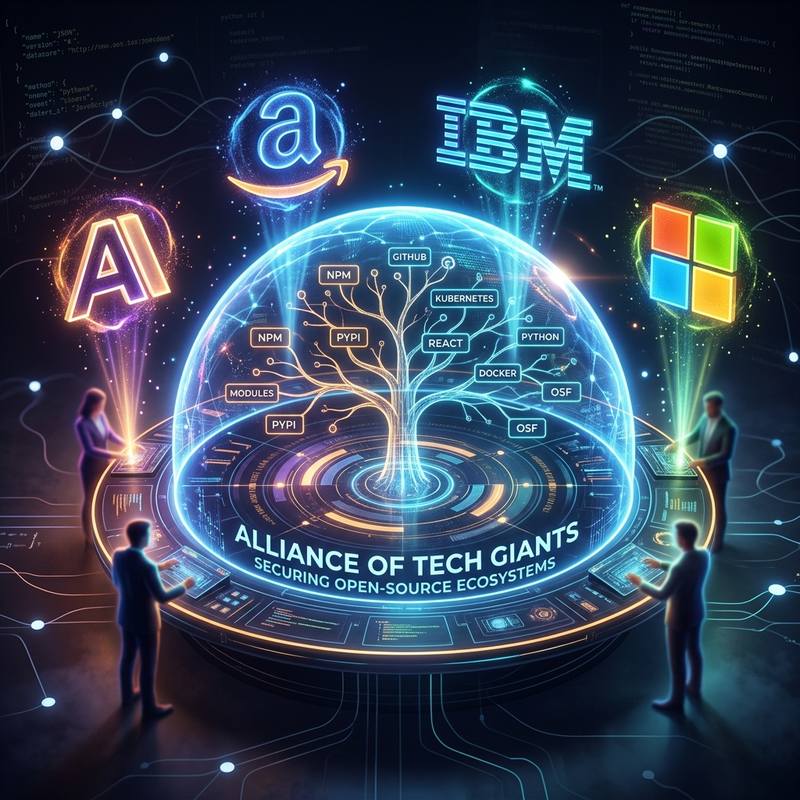
The rise of autonomous codingcoding-agent" class="internal-link">coding agents has dramatically accelerated the rate of software development, but it has also triggered a -workflow" class="internal-link">workflow-automation-is-eliminating-the-middle-layer-of-knowledge-work" class="internal-link">quiet crisis in the open-source software supply chain. In late June 2026, tech leaders from Anthropic, AWS, IBM, and Microsoft officially launched the Akrites Alliance. Named after the historical Byzantine border guards, this coalition was formed to protect the open-source software framework from a wave of AI-generated security flaws, dependency hallucinations, and unstable patch submissions. It represents the first coordinated effort by the tech industry to establish standard, cryptographically verified trust building-a-geo-distributed-automation-pipeline-overcoming-speculativelatency-and-legal-boundaries" class="internal-link">boundaries for AI code developersgeneration.
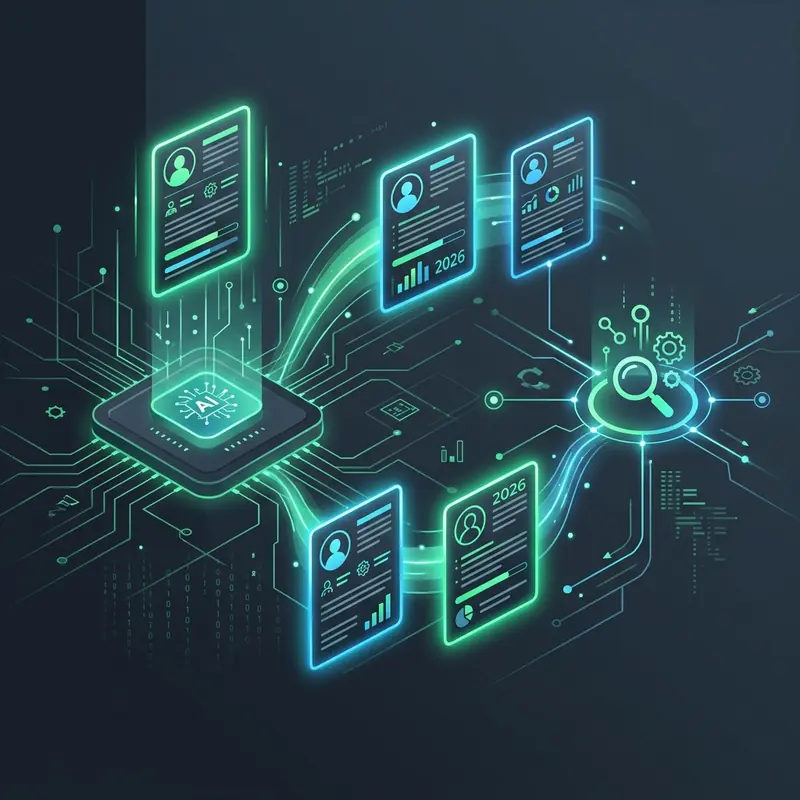
Figure 1: The Akrites Alliance \\u2014 Tech giants unite to standardize trust verification and code validation chains across the open-source software framework.
The core problem the Akrites Alliance is tackling is the "firehose effect" of -her-entire-department--and-kept-her-job" class="internal-link">automated code generation. When developers use agents to write entire modules, the AI frequently introduces minor security bugs that human maintainers, already overwhelmed by pull requests, struggle to catch. More critically, AI agents often suffer from **dependency hallucinations**\\u2014referencing non-existent packages, or utilizing outdated, vulnerability-ridden libraries that they remember from their pre-2025 training data.
Malicious actors have already begun exploiting this behavior by publishing "typo-squatted" packages that match common AI hallucinations, effectively tricking developers who blindly merge AI-generated dependencies into downloading malware. The Akrites Alliance was established to stop this software supply chain vulnerability before it achieves systemic scale.
The Alliance's primary initiative is the standardization of the Akrites Verification Pipeline, an automated security framework that audits and certifies AI-generated contributions before they reach public repositories like npm, PyPI, or GitHub:
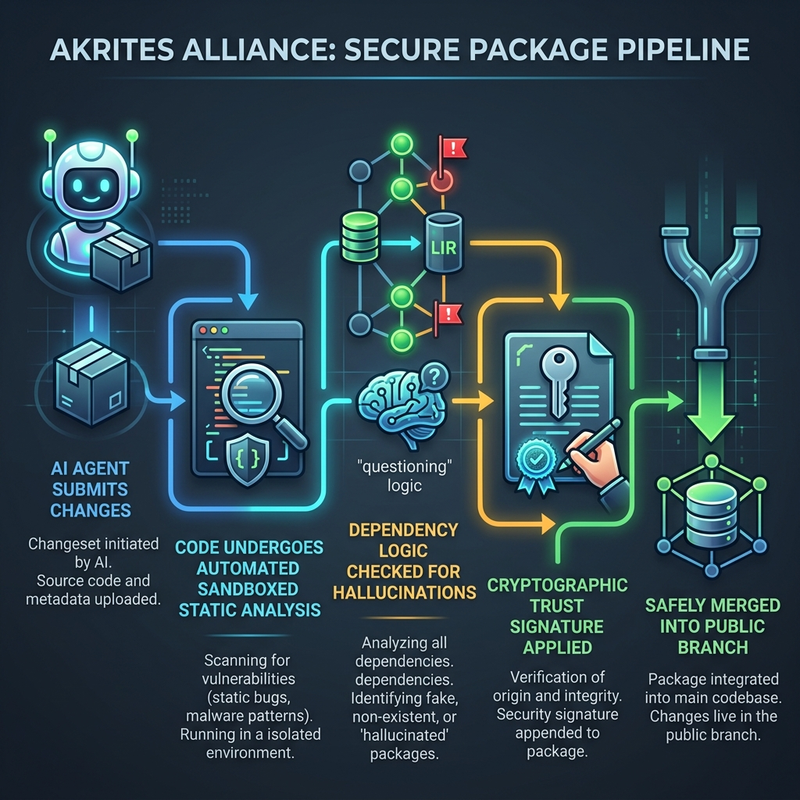
Figure 2: The Akrites Verification Pipeline \\u2014 the cryptographic validation flow for AI-authored software commits.
| Stage | Action | Security Purpose |
|---|---|---|
| 1. Submission | Metadata Tagging | Authorship tags identify whether code was generated, modified, or written entirely by AI. |
| 2. Static Audit | Sandboxed AST Scan | Automated scanners check for classic coding flaws (SQL injection, buffer overflows, unescaped logs). |
| 3. Dependency Check | Hallucination Audit | Cross-references every imported library against verified package lists to detect phantom or squatted packages. |
| 4. Trust Signature | Cryptographic Attestation | Signs the validated commit with a temporal cryptographic signature, verifying it passed Akrites checks. |
| 5. Safe Merge | Repo Integration | Maintainers merge with confidence, knowing the AI contribution has a verified, audited trust signature. |
The introduction of the Akrites Alliance trust model will have significant downstream effects for software development ditching-the-ide-how-claude-code-is-transforming-terminal-first-automation" class="internal-link">claude-vs-chatgpt-vs-gemini-for-content-teams-in-2026" class="internal-link">teams-must-do-before-august" class="internal-link">teams and open-source contributors:
- The -seo-is-crumbling" class="internal-link">Death of Anonymous Commits: To maintain trust, public repositories may begin rejecting commits containing significant AI-generated segments that lack an Akrites attestation signature.
- Stricter CI/CD Gatekeeping: Teams will need to integrate automated dependency check tools and static validators directly into their pull request flows, increasing the importance of secure, sandboxed testing containers.
- Standardized AI Auditing: The collaboration between Anthropic and Microsoft ensures that future coding agents will come pre-configured with Akrites compliance rules, preventing agents from proposing hallucinatory dependencies in the first place.
The Akrites Alliance is a structural acknowledgement that the software framework cannot survive a high-volume influx of unchecked, AI-generated code. By establishing automated, cryptographically verified trust pipelines, the tech industry is laying the foundation for a secure developer workspace \\u2014 protecting the shared open-source commons in the age of autonomous artificial intelligence.
Before examining whether the Akrites Alliance can succeed, it is worth understanding the problem it is trying to solve in concrete technical terms. The proliferation of AI code generation tools in 2024-2025 created a crisis of incompatible trust frameworks across the software supply chain. Each major AI coding assistant had its own approach to code provenance, licensing compliance, and vulnerability disclosure — or, in many cases, no coherent approach at all.
GitHub Copilot, trained on public repositories, generates code that can match or closely resemble existing copyrighted code without attribution. OpenAI's Codex, Anthropic's Claude Code, Google's Gemini Code Assist, and dozens of smaller models each have different training data compositions, different approaches to filtering copyrighted patterns, and different levels of transparency about what code they were trained on. When enterprise developers use these tools in combination — rotating between assistants based on task type — the provenance of generated code becomes genuinely impossible to audit. Legal teams at Fortune 500 companies began raising red flags in 2025 as the volume of AI-generated code in production systems grew to levels where copyright liability risk was no longer theoretical.
The Akrites Alliance emerged from a recognition that individual AI companies cannot solve this problem unilaterally. A code provenance standard only has value if all major code generation tools implement it consistently. A vulnerability disclosure framework for AI-generated code only works if the tool that generated the vulnerable code can be identified and notified. These are coordination problems that require industry-wide standards, not competitive differentiators that any single company can build alone. The parallels to earlier standards battles in tech — the SSL/TLS standardization process, OAuth, the OpenID Connect adoption wave — are instructive for understanding both the path to success and the failure modes the Akrites Alliance must avoid. For context on the regulatory environment driving this standardization push, see our analysis of EU AI Act compliance requirements for AI code generation.
The Akrites Alliance's technical proposal centers on a Code Trust Manifest (CTM) — a structured metadata format that AI code generation tools embed in their output to provide cryptographically-verifiable information about the code's provenance and risk profile. The CTM specifies: the AI model version that generated the code, the training data provenance attestation (a signed statement from the AI provider asserting what training data was used and what filtering processes were applied), a copyright similarity score (the maximum similarity between the generated code and any known copyrighted code in the training data), a vulnerability risk assessment (a severity-scored list of potential vulnerability patterns present in the generated code), and a license compatibility assessment (the set of licenses of training data that the generated code may be derivative of).
The CTM is embedded as a comment block in generated code and cryptographically signed by the AI provider's key, making it tamper-evident. Tooling in the IDE and CI pipeline can parse CTMs to automatically flag high-similarity or high-vulnerability-risk code for human review before it enters the codebase. Enterprise legal teams can use CTM data to audit their codebases for copyright risk exposure on an ongoing basis rather than reactively after an incident.
The standard also proposes a common vulnerability notification protocol (CVNP) — a mechanism for security researchers who discover vulnerabilities in AI-generated code patterns to report them to the AI providers whose models generated the patterns, triggering updates to the vulnerability risk assessment in those models' subsequent outputs. This is analogous to the CVE (Common Vulnerabilities and Exposures) system for software vulnerabilities, adapted for the novel context of AI-generated code where the "software author" is a model that continues to generate similar patterns until retrained or filtered.
The history of technology standards is littered with technically sound proposals that failed due to adoption dynamics rather than technical flaws. Understanding the adoption failure modes is essential for assessing whether the Akrites Alliance will achieve the industry coordination it seeks.
The primary failure mode for industry standards is the first-mover disadvantage: implementing the standard imposes costs on early adopters (engineering investment, disclosure requirements) while providing no benefits until sufficient competitors also adopt it. AI companies have a particularly strong incentive to delay adoption because the transparency requirements in the CTM standard could expose competitive information about training data composition and filtering approaches. A company that adopts the standard first effectively discloses proprietary information before its competitors do, creating a strategic disadvantage. This dynamic typically results in everyone waiting for everyone else to move first — a classic coordination failure that requires an external forcing function to resolve.
The forcing functions that can break this deadlock are regulatory mandates and large customer procurement requirements. The EU AI Act's transparency requirements create regulatory pressure that could mandate CTM-equivalent disclosures for high-risk AI systems. Large enterprise customers (Fortune 500 procurement teams, government agencies) that make CTM compliance a procurement requirement for AI development tools create direct commercial incentive for adoption. The Akrites Alliance's strategy appears to be building industry consensus first and then lobbying for regulatory recognition of the CTM standard as a safe harbor for EU AI Act compliance — a sequencing that has worked in previous standards battles. The combination of enterprise procurement pressure and regulatory recognition, if achieved, could drive adoption within 18-24 months of the standard's formal publication. This mirrors the trajectory of other AI governance standards covered in our analysis of production AI governance frameworks.
The Akrites Alliance is an industry consortium of major AI companies and enterprise software vendors attempting to standardize code provenance, copyright risk assessment, and vulnerability disclosure for AI-generated code. Its primary deliverable is the Code Trust Manifest (CTM) standard — a cryptographically-signed metadata format embedded in AI-generated code.
The CTM is a standardized metadata format embedded in AI-generated code that provides: the model version that generated it, training data provenance attestation, copyright similarity scores, vulnerability risk assessments, and license compatibility information — all cryptographically signed by the AI provider to be tamper-evident.
First-mover disadvantage: implementing transparency requirements in a CTM-like standard requires disclosing information about training data composition and filtering approaches before competitors do the same, creating strategic disadvantage for early adopters. This coordination failure typically requires regulatory mandates or large customer procurement requirements to resolve.
The CVNP is a proposed mechanism for security researchers to report discovered vulnerabilities in AI-generated code patterns to the AI providers whose models generated them. Analogous to the CVE system for software vulnerabilities, it triggers model retraining or filtering updates to prevent the vulnerable patterns from being generated in future outputs.
The primary barriers are: first-mover competitive disadvantage (early adopters disclose training data information before competitors), engineering implementation cost, and lack of immediate value before sufficient competitors adopt. Potential forcing functions: EU AI Act regulatory mandates, enterprise procurement requirements specifying CTM compliance, and government agency purchasing standards.